With January almost over and no lifers on offer (or at least none with a reasonable chance of success) I had a trip out to get a few more onto the year list. After a successful weekend in Weymouth (9 ticks) I decided to be a bit more land-based. The best trip seemed to be to head first to Lynford Arboretum and then to Eldernell. The first stop would be for woodland birds and the second for the overwintering owls.
It wasn't an early start but I still got to Lynford about 10.30. This is a lovely little reserve on the edge of the Brecks in Norfolk. It is known mainly for the hawfinches which are there in variable numbers each winter but it also good for woodland birds such as brambling, marsh tit, yellowhammer and crossbill. Even firecrest can be found there.
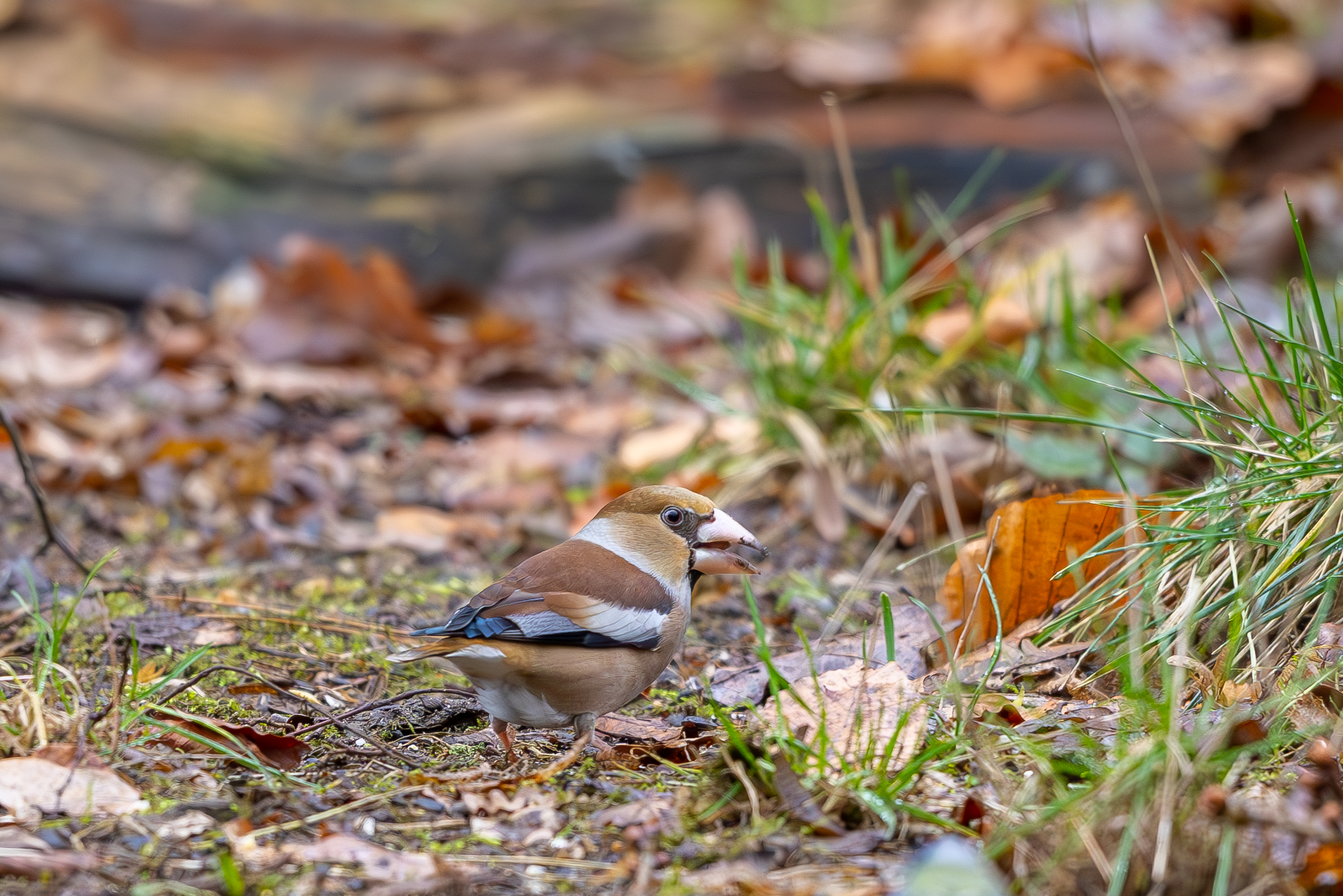
It was only a short walk to the feeding station where another birder was already looking down the short ride. I could see a number of birds on the ground and he said he'd already seen both hawfinch and brambling. It took only a couple of minutes and a brute of a hawfinch came down to feed on the ground.
They are very reliable here but this is the first time for some years that I've seen them this close. That beak gives them the nickname of being a parrot! It is usually used for cracking seeds and you can see how good it would be for that purpose.
Despite having good views of brambling and marsh tits, both year ticks, I failed to get a decent photograph despite heavy-baiting of the bridge area which was alive with other small birds.
I failed to find any crossbills or firecrests so with another hours drive to my next stop I called it a morning and left for Eldernell. This is part of the Nene washes, north east of Peterborough. It's very flat area of reclaimed fenland and is a hotspot in Winter for raptors and especially owls.
This Winter the water levels have been exceptionally high so there haven't been many harriers but both long- and short-eared owls are roosting as well as there being a very showy resident tawny owl.
The small carpark was already quite full when I arrived. A quick coffee and a roll sufficed for lunch and I set off for the short walk along river bank.
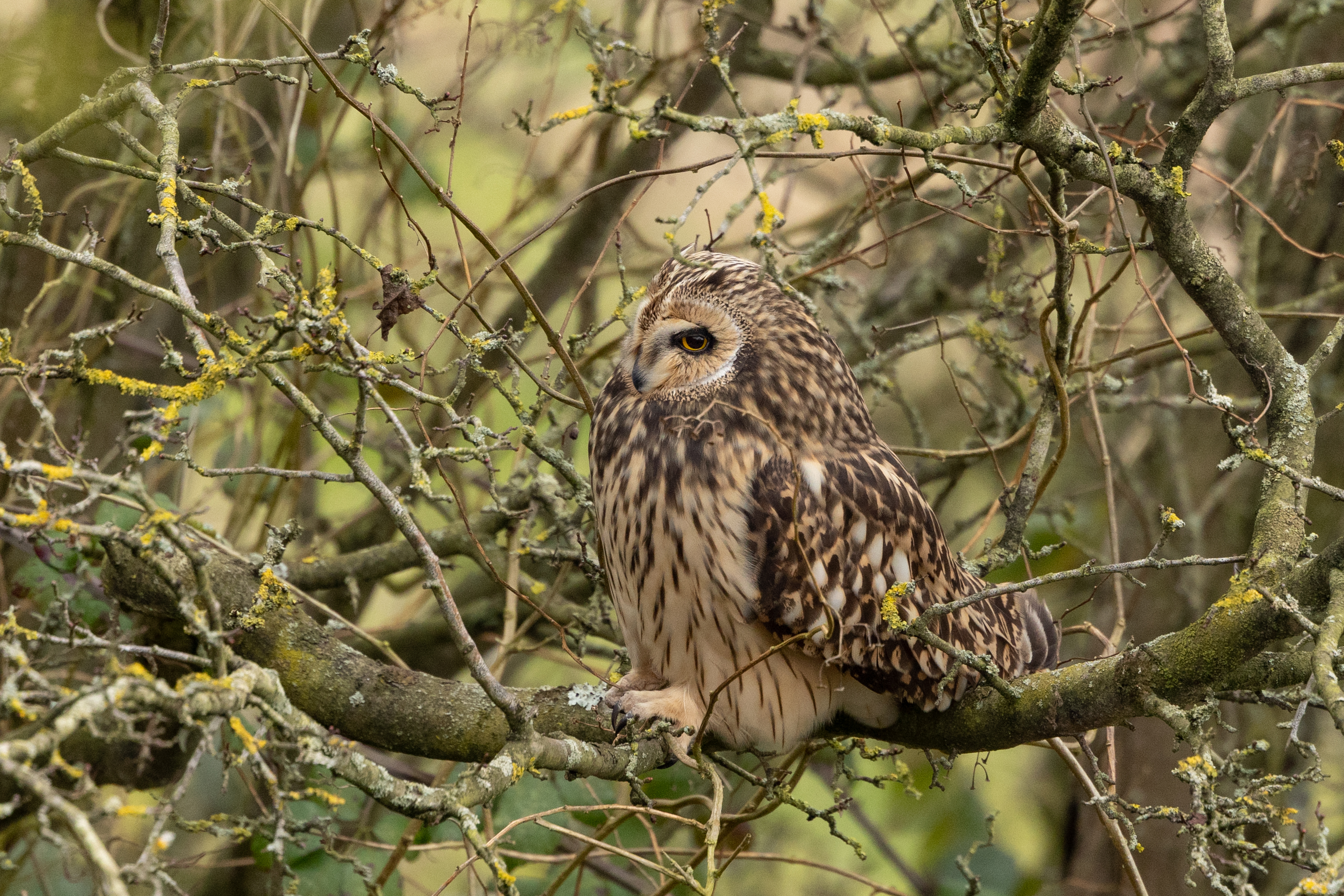
With the help of my thermal camera I almost immediately got onto the first short-eared owl, roosting in the low hedge next to the bank. They are really cryptically camouflaged and can be very hard to spot so the thermal imager really came into its own.
This is a pretty heavy crop as we were keeping well back from where they were. I suspect though that they are well-used to people now and as long as we behaved sensibly then they are pretty chilled.
With it still being only about 1pm it was some while before they were likely to start flying so I worked my way along the hedge to see what else I could find.
Next up was a pair of long-eared owls. One was visible, albeit behind a lot of twigs, the other you could only see via its heat-signature as it was buried in the bush!
It was a shame they were so well-hidden as they are beautiful birds, especially with their over-sized ear-tufts. They are also our most nocturnal owl so were unlikely to be moving before dark. Consequently I left them to their steady stream of admirers and carried on to find the last of the three, the tawny owl. This has been resident in a well-known and highly visible tree-hole for some while. Another birder who I was with helped me find it though it wasn't hard as it was almost perfectly positioned for viewing.
It was in a very small patch of woodland the other side of the river, so totally inaccessible. This was even more so than usual due to the floods. Apparently the waters have receded and at their worst were only a few feet below its hole!
The crowd of admirers swelled to about 6 or 7 but the owl was totally unfazed. In fact it barely even opened one eye to look at us. Every day it must have a steady stream of people coming to look at it!!
Just like the long-eared was it clearly wasn't going to do anything exciting so I decided to put my time into the short-eared owls as they start hunting during daylight hours.
I worked my way back down the hedge and found there were 3 owls visible. One was sitting up in the top of the hedge admiring the view,
but from a photographic point of view was quite obscured. A second was a bit closer but still covered by twigs.
The third one though was sitting out nicely and from one angle had very few twigs in front of it.
As the afternoon moved on the night began to fade and you could the owls starting to stir a little bit. Unfortunately one of them was flushed from its roost by a photographer getting way too close and almost leaning over the fence to get close to it! I "had words" but it clearly wasn't her fault, just coincidence it flew off as she leaned into it!
As the light stated to fade though it all kicked off. First, there was a honking noise from behind us and 4 or 5 skeins of cranes came into their roost on the edge of the flood.
It was an amazing sight and sound. One that has been missing from the UK from many decades but which is now, at leat in the Fens, returning in strength.
The short-eared owls had the idea it was time for supper as well, and were up and hunting. The floods helped as they were limited to looking for voles over the field closest to the car park.
The light was going fast but there were three owls all pirouetting around the meadow, diving down in hope of an early-afternoon feed.
With it getting late, dark and cold I called it and headed back to the car. A very successful and enjoyable day. I got most of the birds I was after and the afternoon at Eldernell was magical. It's got me up to 146 for the year with a day to go!